The Folio App
Overview
This project explores the design of a modern, mobile-optimized reading platform intended to challenge legacy incumbents like Goodreads by prioritizing clarity, visual progress tracking, and focused community interaction. The platform demonstrates how improved mobile design, gamified reading metrics, and structured discussion spaces can create a more engaging experience for readers.
The goal was to reduce friction in tracking reading progress while transforming reading data into motivating insights that drive consistent user engagement and long-term retention.
Problem Existing social reading platforms struggle with outdated interfaces and fragmented experiences. Platforms like Goodreads combine catalog management, social feeds, and recommendation systems into dense interfaces that overwhelm users. Three core challenges emerged: tracking reading progress often requires multiple manual steps; social feeds generate excess noise and irrelevant notifications; and reading insights are hidden or poorly visualized. For readers who primarily use their phones to track books and goals, these friction points interrupt the core experience.
Approach & Process
Research & Market Insights Market analysis revealed a growing demand for cleaner, data-driven reading platforms. While tools like The StoryGraph emphasize reading analytics and Bookly focuses on personal statistics, neither effectively balances progress tracking with meaningful social engagement. Users consistently asked for visual and motivating progress indicators, clear reading goals and milestone tracking, smaller topic-driven discussion communities, and mobile-first experiences optimized for daily use. The primary audience was defined as goal-oriented readers aged 25–45.
Product Strategy Three principles: reduce friction in progress tracking and reflections; turn reading data into motivation; structure social interaction intentionally.
Proposed Solution — tiered dashboard system • Home Dashboard — instant overview with a prominent "Currently Reading" card and clear progress indicators for fast session logging. • Chapter Reflections — structured visual cards for capturing personal insights and key takeaways per chapter, keeping reflection focused and distraction-free. • Visual Reading Analytics — progress bars and charts that gamify milestones and build consistent reading habits. • Community Updates — curated cards highlighting meaningful activity (friends finishing books, quality reviews) instead of a noisy social feed.
Problem
Existing social reading platforms often struggle with outdated interfaces and fragmented experiences. Platforms like Goodreads combine catalog management, social feeds, and recommendation systems into dense interfaces that overwhelm users.
Through competitive review and behavioral analysis, three core challenges emerged:
- Tracking reading progress often requires multiple steps and manual updates
- Social feeds generate excess noise and irrelevant notifications
- Reading insights are hidden or poorly visualized
For readers who primarily use their phones to track books and reading goals, these friction points interrupt the core experience: reading and reflecting on books.
Research & Market Insights
Market analysis revealed a growing demand for cleaner, data-driven reading platforms.
While tools like The StoryGraph emphasize reading analytics and Bookly focuses on personal reading statistics, neither platform effectively balances progress tracking with meaningful social engagement.
User feedback across platforms consistently pointed to several unmet needs:
- Visual and motivating reading progress indicators
- Clear reading goals and milestone tracking
- Smaller, topic-driven discussion communities
- Mobile-first experiences optimized for daily use
The primary audience was defined as goal-oriented readers aged 25–45 who track their reading through mobile devices and prefer focused community interaction over broad social feeds.
Product Strategy
Based on research insights, the product strategy centered on three principles:
- Reduce friction in progress tracking and reflections
- Turn reading data into motivation
- Structure social interaction intentionally
These principles guided both the interface design and overall platform architecture.
Proposed Solution
The final concept introduces a tiered dashboard system designed for clarity and engagement.
Home Dashboard
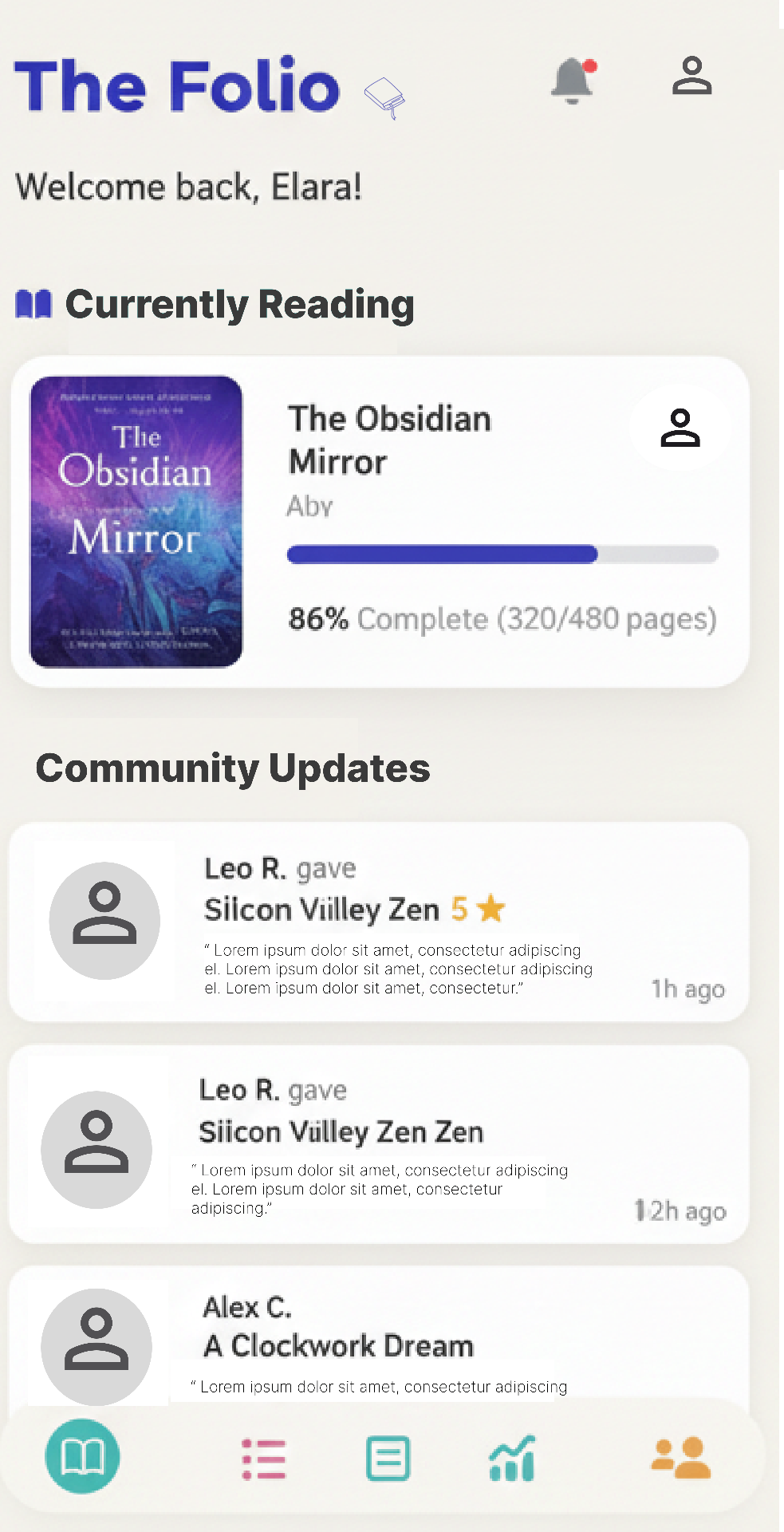
The primary screen provides an instant overview of a user's reading status. A prominent "Currently Reading" card displays the active book with clear progress indicators, allowing users to quickly log reading sessions and track completion.
Reduce friction in progress tracking and reflections
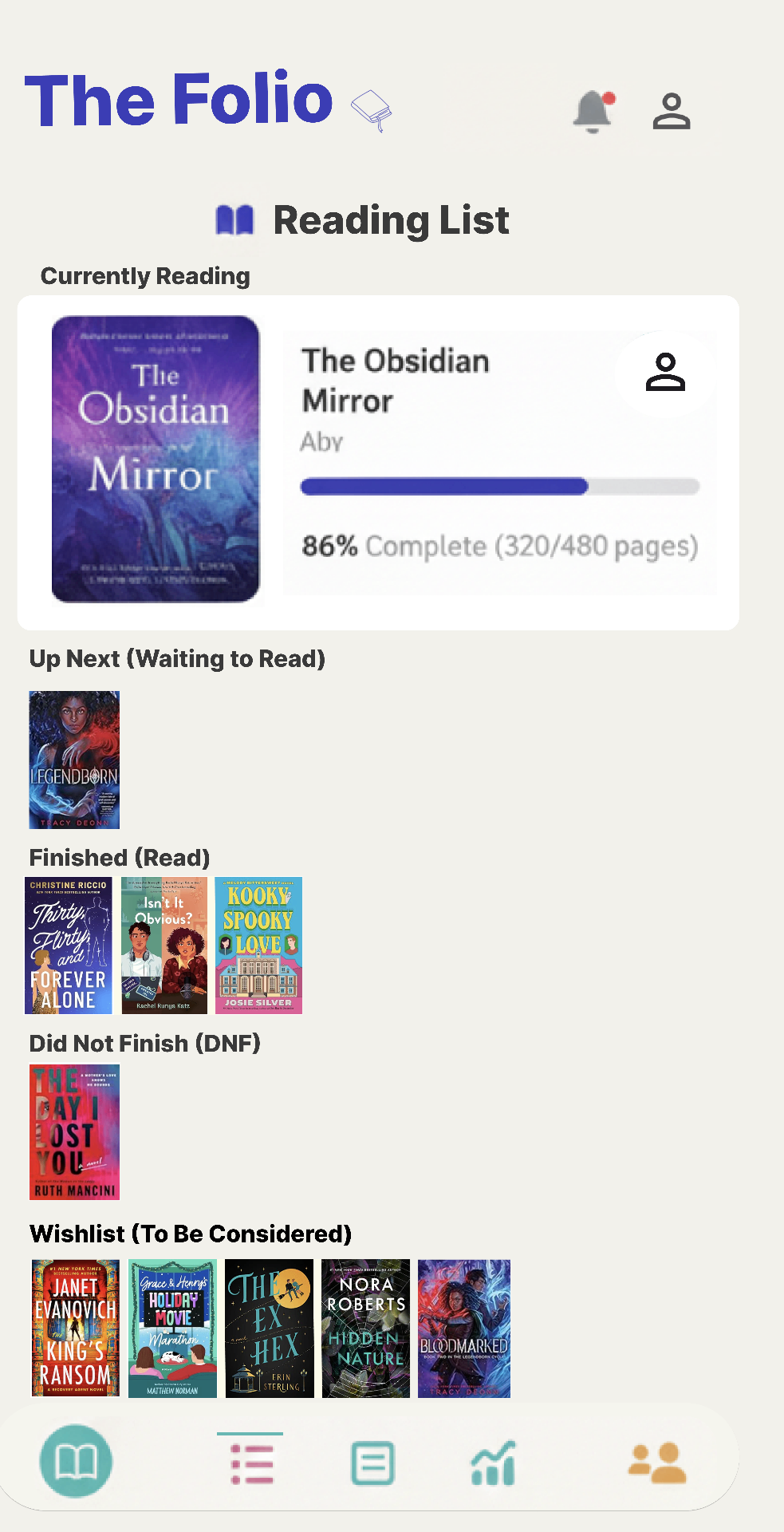
Reading updates should be fast, visual, and intuitive. Readers should have the ability to record their thoughts directly within the app.
Chapter Reflections
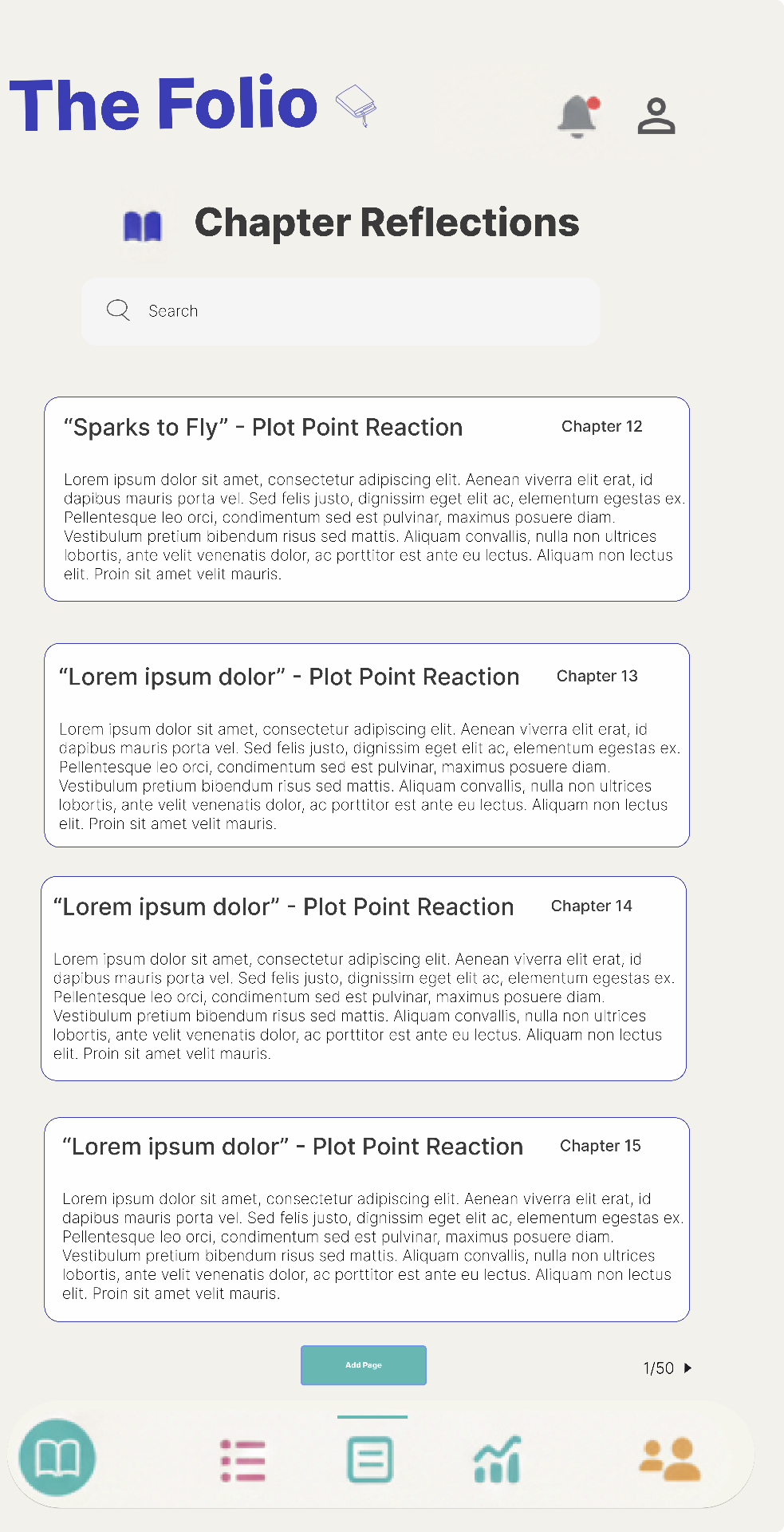
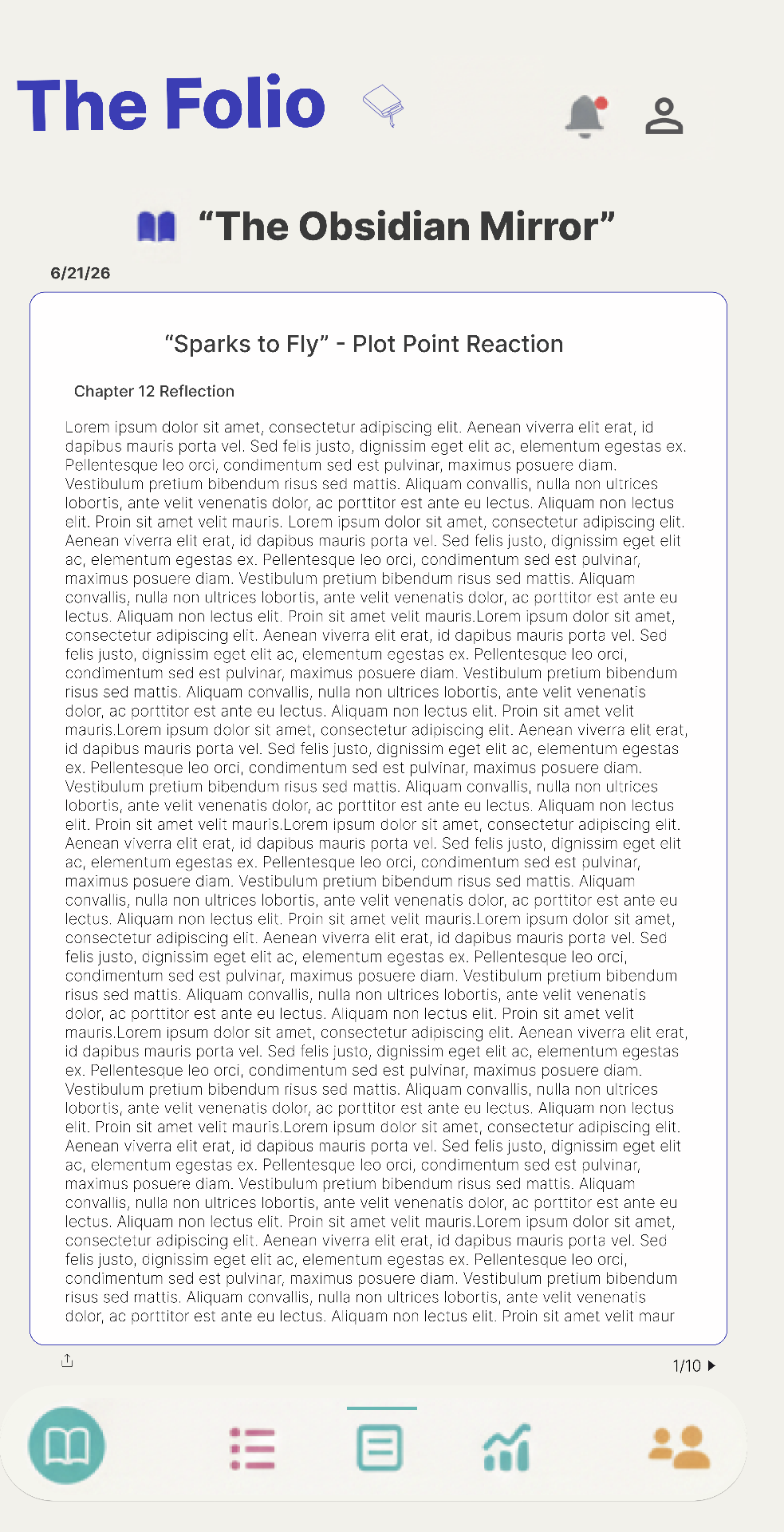
Instead of a noisy social feed, the Chapter Reflections page allows users to capture personal insights, key takeaways, and thoughts on each chapter. Using simple, structured visual cards, it keeps entries organized and digestible, helping users reflect meaningfully on their reading progress while maintaining focus and minimizing distractions.
Turn reading data into motivation
Statistics and milestones should encourage continued engagement through gamification.
Visual Reading Analytics
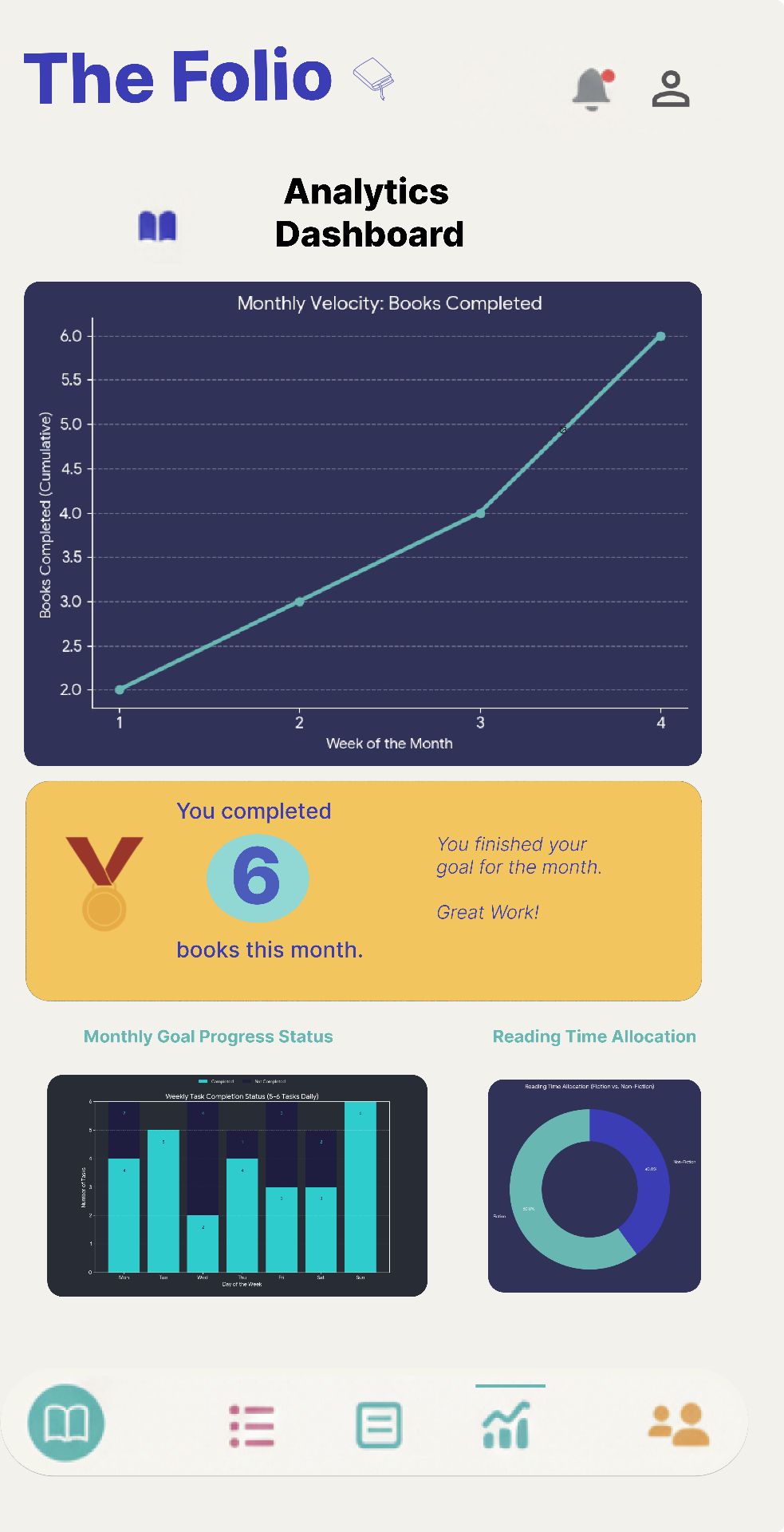
An Analytics Dashboard highlights reading goals and statistics through progress bars and visual charts. This feature transforms reading activity into motivating insights, helping users track milestones and build consistent reading habits.
Structure social interaction intentionally
Community spaces should be focused, relevant, and easy to navigate.
Community Updates
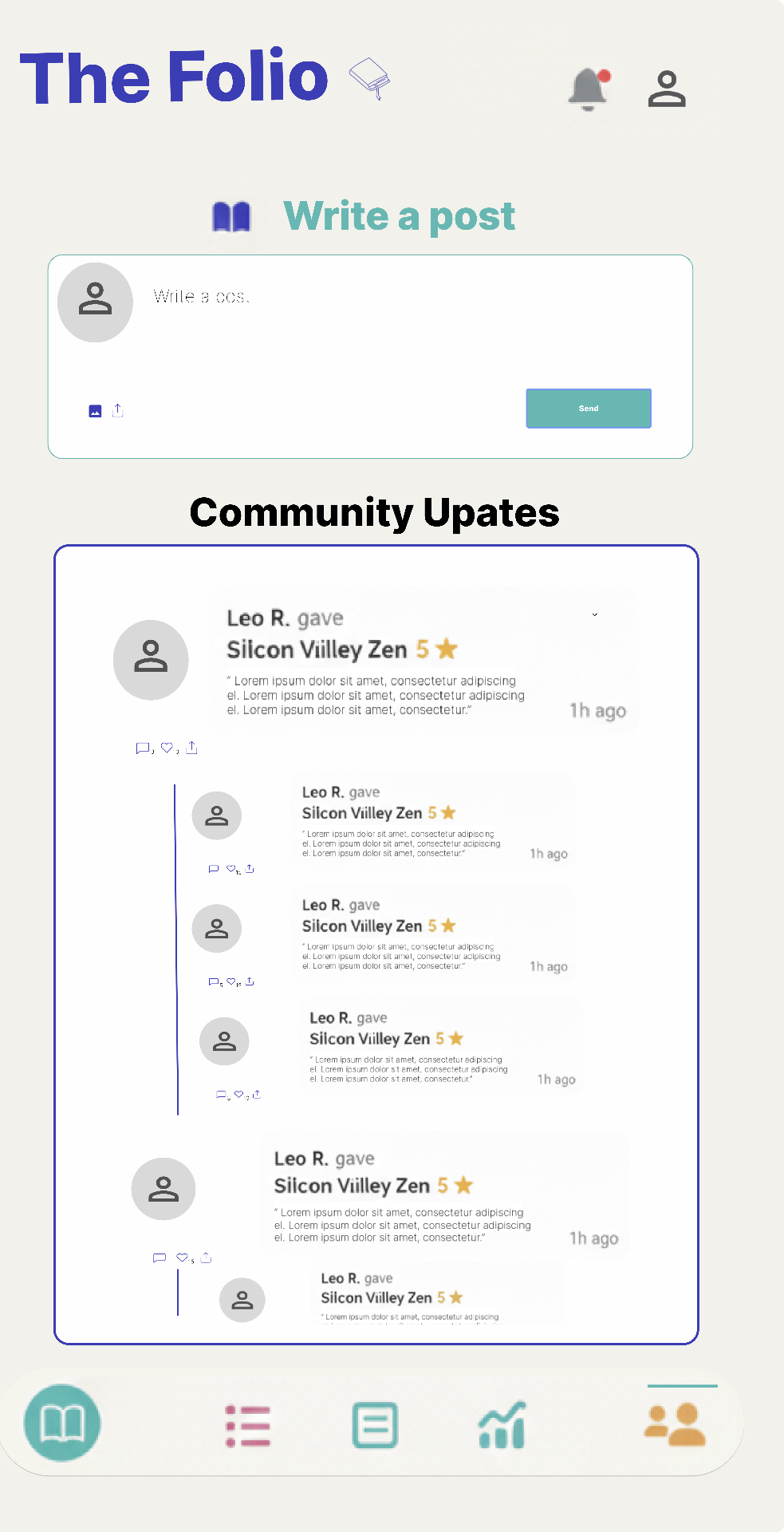
Instead of a noisy social feed, Community Updates highlight meaningful activity—such as friends completing books or posting high-quality reviews—using simple visual cards that keep interactions relevant and digestible.
Proposed Solution — tiered dashboard system
- Home Dashboard — Provides an instant overview of the user's reading activity with a prominent "Currently Reading" card, progress tracking, and streamlined session logging for quick updates.
- Chapter Reflections — Uses structured visual cards that allow users to capture personal insights, quotes, and key takeaways for each chapter while maintaining a focused, distraction-free reading experience.
- Visual Reading Analytics — Features progress bars, milestones, and data visualizations that gamify reading habits, motivate consistency, and help users track long-term reading goals.
- Community Updates — Delivers curated activity cards that surface meaningful interactions such as friends completing books, thoughtful reviews, and relevant discussions instead of overwhelming users with a noisy social feed.
Reflection
This project reinforced how thoughtful product design can reshape familiar digital experiences. Rather than expanding features, the focus was on simplifying workflows, visualizing progress, and structuring social interaction intentionally.
By aligning reading tools with real user behaviors and motivations, the platform demonstrates how a modern approach to product design can transform reading from a passive activity into a more engaging and community-driven experience.